I used to follow a writing rule: “write as if to yourself six months ago.” I think that timeframe should probably be revised to monthly or even weekly. Things are moving fast.
In late December 2025, Andrej Karpathy: former AI director at Tesla, co-founder of OpenAI, the person who coined “vibe coding”, shared something that resonated deeply with me:
Clearly some powerful alien tool was handed around except it comes with no manual and everyone has to figure out how to hold it and operate it, while the resulting magnitude 9 earthquake is rocking the profession. Roll up your sleeves not to fall behind.
The only option, it seems, is forward. For me, moving forward has three dimensions:
- staying current with developments as best I can (the horizontal)
- deepening expertise in my own domain (the vertical)
- using these tools in real life whenever I can think of an application (the practical)
The last layer - the practical one, is where I’ve found the most traction. In 2026, I want to share more of those practical applications here. Not grand theories. Just small, real things I’ve found useful or inspiring.
Rethinking a spreadsheet-heavy process
As the technical designer of the Diploma in Tax Technology syllabus and the short course AI in Tax for the Chartered Institute of Taxation, I often need to review course contents and updates. Our update process used to live in a sprawling master spreadsheet: module contents in various formats, links, revision structures, change priorities, reviewer notes, outstanding actions, and on and on. The content creation team would send me the proposed content updates to review and approve. I’d have to open hundreds of links manually, navigate back to the master spreadsheet, add my comments on each individual content page, then wait for the team to confirm receipt. We’d go back and forth through this cycle until everything was agreed and signed off.
It worked. But clearly far from ideal. We need to rethink the whole process.
Last year, we rebuilt the workflow into a custom webapp. The course content now displays directly in a browser, so I could comment right alongside the material. No more switching between tabs, scrolling across columns, or hunting for the right cell. Everything syncs to the backend automatically. The master spreadsheet still exists, but it’s abstracted away as a database. I never have to trace back to it manually.
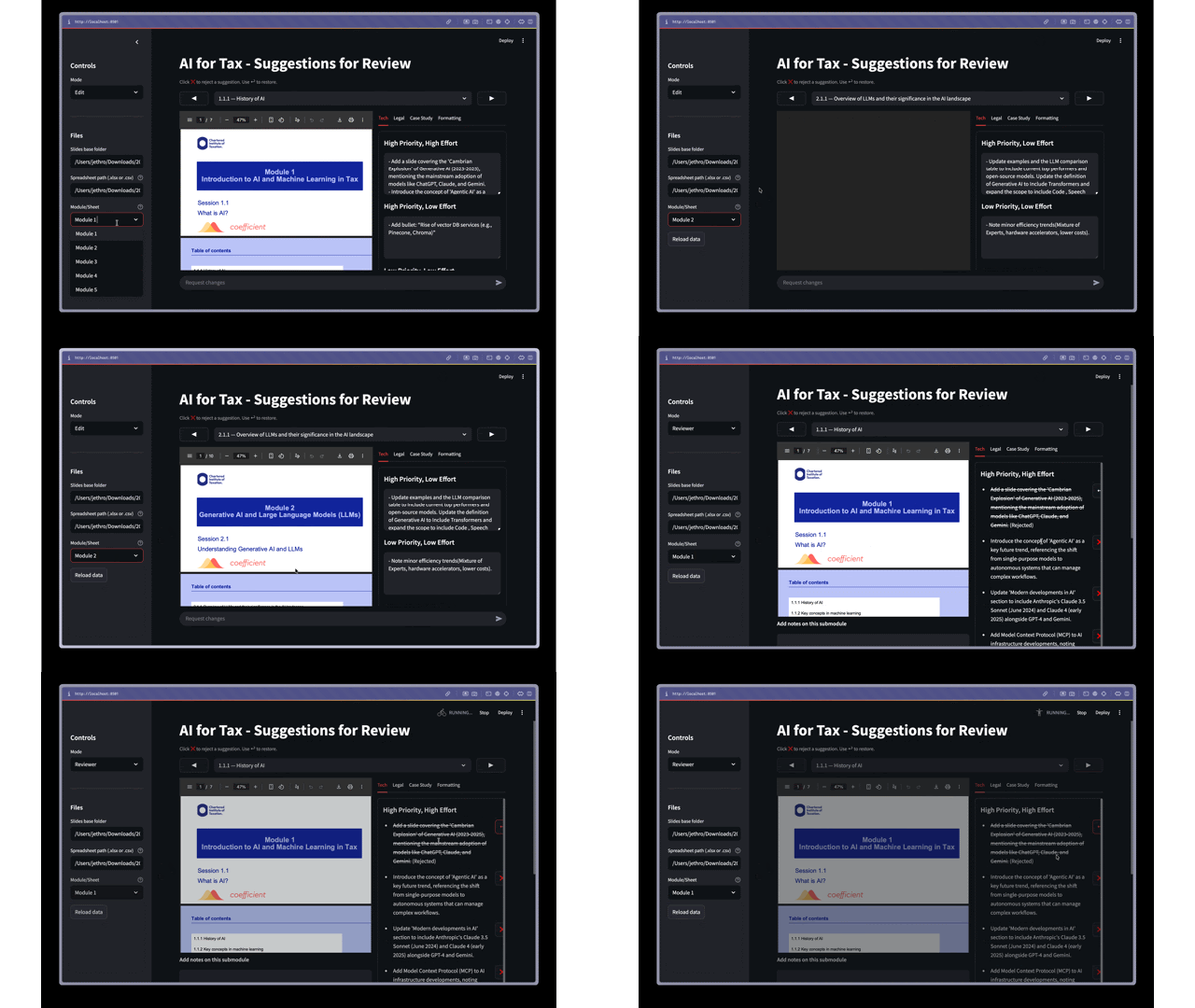
The technical stack (Streamlit, Docker, Claude Code) matters less than the outcome: our feedback cycles are faster, the process keeps improving, and everyone can focus on what actually matters, i.e. the quality of the course itself.
Does this mean we have less work? Not at all. But we have better work.
A question worth asking
Tax runs heavily on spreadsheets because they’re flexible, familiar, and powerful. But they’re also where process complexity tends to hide.
First, solve the problem. Then, write the code. — John Johnson
If you have a workflow that involves flicking between formats, copying data manually, or scrolling endlessly to find information, it might be worth asking: is the spreadsheet serving the work, or is the work serving the spreadsheet? The tools to rethink these processes are more accessible than ever. You just need to start somewhere small.
I’ll be sharing more practical examples like this throughout 2026 — small changes, real outcomes, lessons learned. If that’s useful to you, feel free to connect with me on LinkedIn or reach out via DM. I’d love to hear what you’re working on too.